The Psychology Behind Social Proof: Why We Buy What Others Recommend
Opinafy Team
January 13, 2026
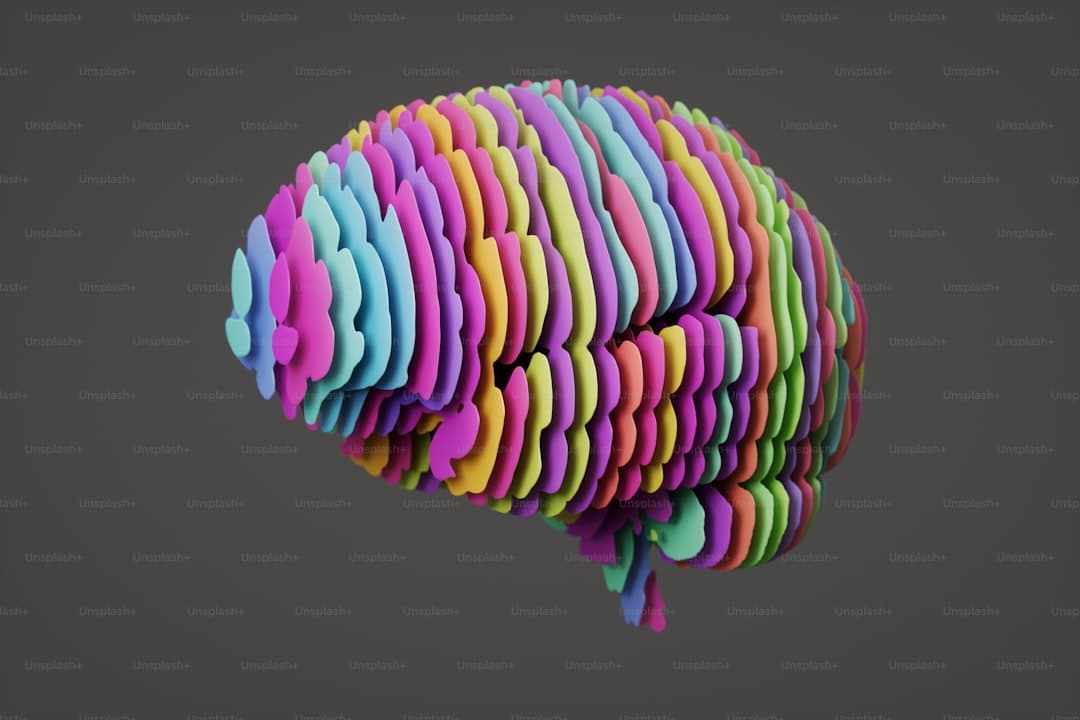
We Are Social Animals First, Rational Consumers Second
Before we are consumers, investors, or business owners, we are social animals. Our brains evolved over millions of years in small tribal groups where survival depended on cooperation, social cohesion, and the ability to learn from the experiences of others. These evolutionary pressures hardwired our brains to pay exquisite attention to the behavior and opinions of those around us.
When we make a purchasing decision today, we like to think we are being rational: weighing features, comparing prices, evaluating alternatives. But the truth is that the vast majority of our decisions are heavily influenced by social signals that operate below the level of conscious awareness. Understanding these psychological mechanisms is not just academically interesting; it is practically essential for anyone who wants to build trust and drive conversions.
In this article, we will explore the key psychological principles that make social proof so powerful, from evolutionary psychology to modern neuroscience, and show how each principle applies to the world of customer testimonials and marketing.
The Evolutionary Roots of Social Proof
Imagine you are a prehistoric human walking through an unfamiliar forest. You come to a fork in the path. One path has footprints, broken branches, and signs that others have walked it recently. The other path is untouched. Which do you choose? Without hesitation, you follow the path others have taken. Why? Because in the ancestral environment, following the crowd was a survival strategy. If others walked that path and survived, it is probably safe. If they avoided the other path, there might be a reason: a predator, a cliff, or some other danger.
This instinct is so deeply embedded that it operates automatically in modern contexts that have nothing to do with physical survival. When we see that thousands of people have bought a particular product, our ancient brain interprets this the same way it would interpret a well-worn path through the forest: if so many others chose it, it must be safe and good.
This evolutionary perspective explains why social proof works even when we know we are being influenced. We cannot simply decide to ignore our instincts any more than we can decide to stop being hungry. The best we can do is be aware of these influences, and the best marketers can do is provide legitimate social proof that helps customers make genuinely good decisions.
Cialdini's Principle of Social Proof
Dr. Robert Cialdini formalized the concept of social proof in his landmark 1984 book "Influence: The Psychology of Persuasion." He defined social proof as the tendency for people to view a behavior as correct to the degree that they see others performing it. In other words, when we are uncertain about what to do, we look to others for guidance.
Cialdini identified several conditions under which social proof is most powerful. It is strongest when we are uncertain, because uncertainty is the trigger that activates our tendency to look to others. It is more influential when it comes from people similar to us, because we identify more strongly with peers than with dissimilar others. And it is most potent when it comes from multiple sources, because the more people who endorse something, the stronger the signal.
These conditions have direct implications for testimonials. They are most effective when displayed at moments of buyer uncertainty, such as the pricing page or checkout. They are most persuasive when they come from customers who resemble the prospect. And they are most compelling when they are numerous, which is why Walls of Love and high review counts are so powerful.
Informational Social Influence
Psychologists distinguish between two types of social influence. Informational social influence occurs when we accept information from others as evidence about reality. We assume that others have information we do not, and their choices therefore provide useful data for our own decisions.
This is the primary mechanism through which testimonials work. When a potential customer reads a testimonial from someone who has already used your product, they gain information they did not have before: this product works, it delivers on its promises, and it has made someone else's life or business better. They accept this information as evidence, just as they would accept any other reliable data source.
Informational influence is strongest when the source is perceived as knowledgeable and experienced. This is why testimonials from customers who provide specific details, metrics, and context are more persuasive than vague endorsements. A testimonial that says "Our conversion rate increased by 28% in 60 days" provides actionable information that the prospect can use in their decision-making process.
Normative Social Influence
The second type of social influence is normative: the desire to conform to the expectations of others and to belong to a group. We want to make choices that will be approved of by our peers, colleagues, and social groups. This desire for belonging and acceptance influences purchasing decisions more than most people realize.
In a business context, normative influence explains why logos of well-known companies on your website are so effective. When a prospect sees that reputable companies in their industry use your product, they feel that choosing your product is the "normal" choice for companies like theirs. Not choosing it might mean they are behind the curve or making an unconventional decision.
This is also why industry-specific testimonials are so powerful. When a lawyer sees testimonials from other law firms, or when a restaurant owner sees testimonials from other restaurants, they experience normative pressure to adopt the same solution. "Everyone in my industry is doing this" is one of the most powerful motivators in business decision-making.
The Bandwagon Effect
The bandwagon effect is the phenomenon where the rate of adoption increases as more people adopt a product or behavior. It is the reason why bestseller lists sell more books, why viral videos get more views, and why popular restaurants attract even more diners. Success breeds more success because people want to be part of what is already popular.
For testimonials, the bandwagon effect means that displaying the volume of your social proof is as important as its quality. Numbers like "Join 10,000+ happy customers" or "Trusted by 500+ businesses" trigger the bandwagon effect by signaling that a critical mass of people have already made this choice. The larger the number, the stronger the pull.
The Halo Effect and Authority Bias
The halo effect is the cognitive bias whereby our impression of someone in one domain influences our perception of them in other domains. If we perceive someone as attractive, we unconsciously assume they are also intelligent, kind, and trustworthy. In the context of testimonials, the halo effect works through association.
When a well-known company or an industry expert endorses your product, their reputation creates a halo that extends to your brand. "If Google uses this tool, it must be excellent" is halo effect reasoning in action. This is why testimonials from recognizable brands and authority figures carry disproportionate weight.
Authority bias, a related concept, is the tendency to attribute greater accuracy and importance to the opinion of an authority figure. A testimonial from a recognized industry expert, a published author, or a successful entrepreneur carries more persuasive power than the same words from an unknown individual, even if the testimonial content is identical.
Loss Aversion and FOMO
Daniel Kahneman and Amos Tversky's prospect theory demonstrates that humans feel the pain of a loss approximately twice as intensely as the pleasure of an equivalent gain. This loss aversion has profound implications for how testimonials work.
Effective testimonials often frame the value in terms of what the customer would have lost by not choosing the product. "I shudder to think how much revenue we would have left on the table if we had not started using testimonials" triggers loss aversion more powerfully than "We gained a lot of revenue from testimonials." The fear of missing out, commonly known as FOMO, is a specific application of loss aversion in social contexts.
Testimonials that hint at what competitors are already doing, such as "I wish I had started using this sooner. My competitors were already leveraging testimonials while I was still on the fence," activate FOMO and create urgency to act.
Cognitive Ease and the Mere Exposure Effect
Our brains prefer information that is easy to process. This preference for cognitive ease means that familiar things feel more trustworthy than unfamiliar ones. The mere exposure effect, demonstrated by psychologist Robert Zajonc, shows that repeated exposure to something increases our preference for it, even if we are not consciously aware of the exposure.
For testimonials, this has practical implications. Displaying testimonials consistently across your website, social media, emails, and advertising creates repeated exposure that builds familiarity and trust over time. The more often a prospect encounters your social proof, the more natural and trustworthy your brand feels to them.
The Narrative Transportation Effect
Psychologists have found that when we become absorbed in a story, our resistance to persuasion drops dramatically. This is called narrative transportation, the experience of being "transported" into a narrative world. When we are engaged in a story, we lower our critical defenses and become more receptive to the message embedded within the narrative.
This is why testimonials that tell a story, with a clear beginning, challenge, solution, and outcome, are far more persuasive than simple statements of satisfaction. A testimonial that reads like a mini-story engages the reader emotionally and circumvents the skepticism that would normally accompany a marketing claim.
Applying Psychology to Your Testimonial Strategy
Understanding these psychological principles transforms how you approach testimonials. Display testimonials at moments of maximum uncertainty, particularly on pricing and checkout pages. Feature testimonials from customers who closely match your target audience. Emphasize volume with counters, aggregated ratings, and Walls of Love. Include authority testimonials from recognizable brands and experts. Use narrative testimonials that tell compelling before-and-after stories. Frame value in terms of what the customer would have lost without your product.
Opinafy gives you the tools to apply all of these principles through professional testimonial collection and display. With customizable widgets, you can present the right testimonials in the right format at the right moment in the customer journey.
Conclusion: Work With Human Nature, Not Against It
Social proof is not a marketing trick. It is a fundamental feature of human psychology that has been shaping behavior for millennia. By understanding the mechanisms behind it, you can create testimonial strategies that genuinely help potential customers make better, more confident decisions. And in doing so, you build a business based on authentic trust rather than persuasive manipulation.
Start collecting customer stories that speak to these deep psychological needs. Display them thoughtfully and strategically. And let the natural power of social proof do what it has always done: guide people toward choices that others have already validated. Try Opinafy free today and harness the psychology of trust for your business.
Start collecting testimonials for free
Opinafy helps you collect, manage, and display customer testimonials professionally. No credit card required. No commitment.
Create free account